
When an anaerobic digester begins to underperform, the impact is immediate—reduced methane production, increased operational costs, and greater system instability.
The good news is that most digesters can be revitalized with the right approach.
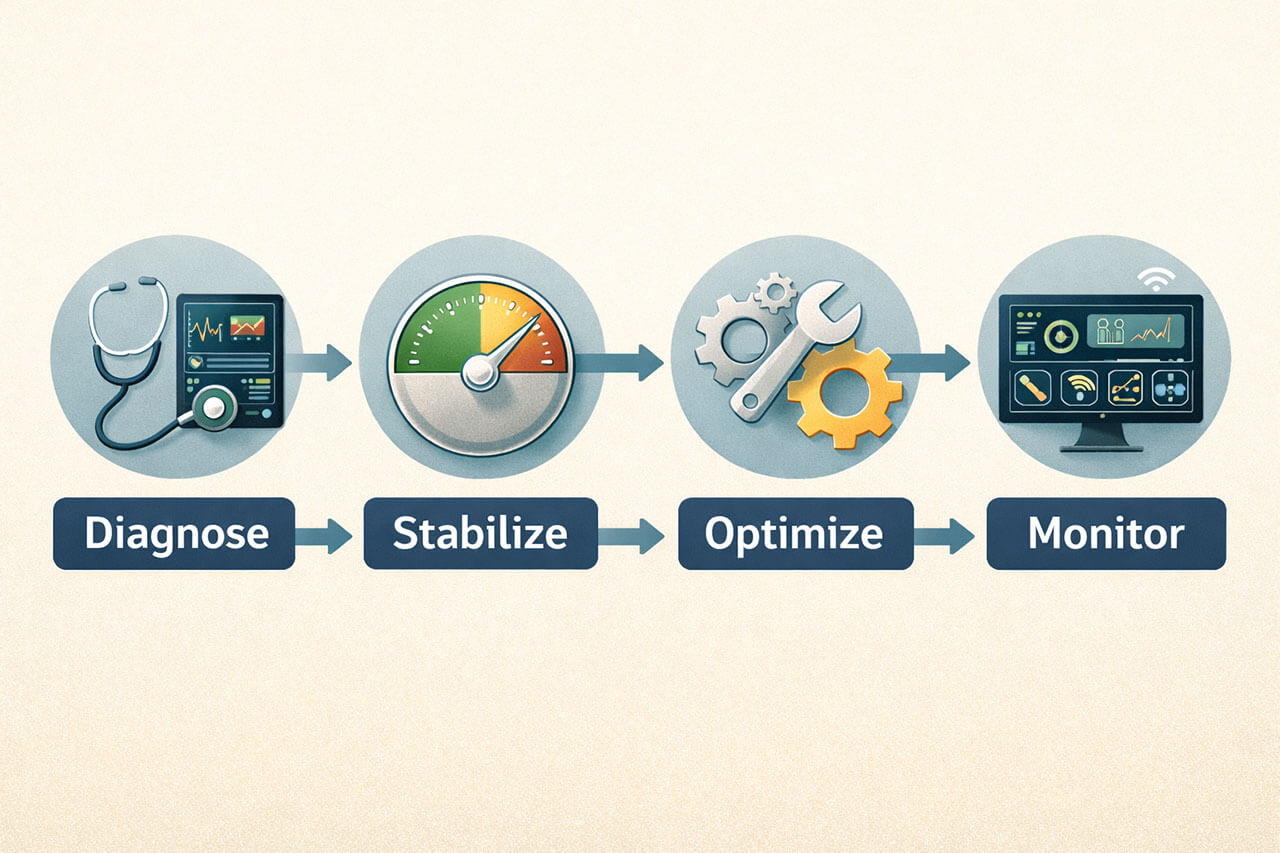
Improving performance requires identifying root causes, restoring biological balance, and implementing better monitoring and control strategies.
Start with a Clear Diagnosis
Before making changes, operators must understand what is causing underperformance.
Common issues include:
- Feedstock variability
- Overloading or underloading
- pH imbalance
- Poor system visibility
Learn how to identify early warning signs
Stabilize the Biological Process
The first priority in revitalizing a digester is restoring biological balance.
Anaerobic digestion depends on stable microbial activity, and disruptions can reduce system efficiency.
Understanding anaerobic digestion highlights the importance of maintaining consistent conditions.
Steps to stabilize the system may include:
- Reducing organic loading rates
- Adjusting feedstock composition
- Correcting pH levels
Understand the causes of instability
Optimize Feedstock Management
Feedstock plays a central role in system performance.
Improving feedstock consistency and composition can significantly enhance methane production.
Operators should:
- Evaluate feedstock quality
- Reduce variability where possible
- Adjust blending strategies
Explore feedstock optimization
Improve Monitoring and Visibility
Limited visibility is one of the biggest challenges in restoring performance.
Without real-time insight, it is difficult to identify issues or track improvements.
Real-time monitoring enables operators to:
- Detect changes in system behavior
- Measure the impact of adjustments
- Maintain stable operating conditions
Learn more about Real-Time Monitoring
Use Data to Guide Adjustments
Revitalizing a digester is not a one-time fix—it requires continuous refinement.
Data-driven insights allow operators to make informed decisions and avoid trial-and-error approaches.
Advanced analytics can help identify trends and optimize system performance over time.
Address Gas Production and Composition
Monitoring both the volume and composition of biogas is critical during the recovery process.
Changes in methane concentration or gas output can indicate whether adjustments are improving performance.
Learn how to increase production
Transition to Proactive Management
Once performance is restored, the goal should be to prevent future underperformance.
This requires moving from reactive troubleshooting to proactive system management.
Operators who adopt continuous monitoring and analytics can:
- Maintain stability
- Improve consistency
- Reduce long-term risk
Building a More Resilient System
Revitalization is an opportunity to strengthen overall system performance.
By improving visibility, optimizing inputs, and leveraging data, operators can create more resilient and efficient operations.
Restoring Performance and Maximizing Output
An underperforming digester does not have to remain that way.
With the right combination of monitoring, analytics, and operational adjustments, facilities can restore performance and improve long-term outcomes.
Explore how Nirova helps optimize performance