
Monitoring is essential to maintaining performance in anaerobic digestion systems.
For many facilities, traditional lab testing has been the standard approach. However, as biogas operations become more complex and performance expectations increase, real-time monitoring is emerging as a more effective solution.
Understanding the differences between these approaches is key to improving system stability, efficiency, and output.
How Traditional Lab Testing Works
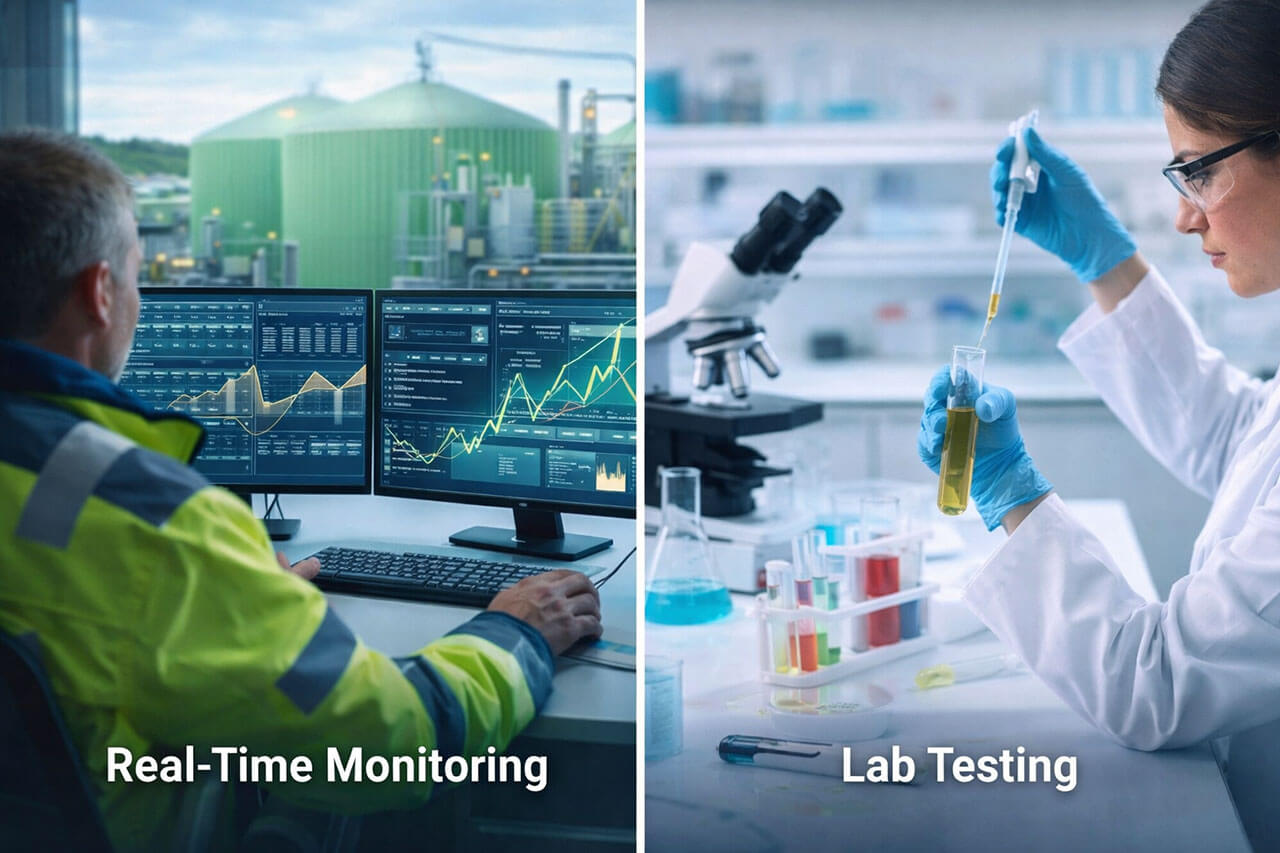
Lab testing involves collecting samples from the digester and analyzing them periodically to assess system conditions.
These tests may measure:
- pH levels
- Volatile fatty acids (VFAs)
- Alkalinity
- Gas composition
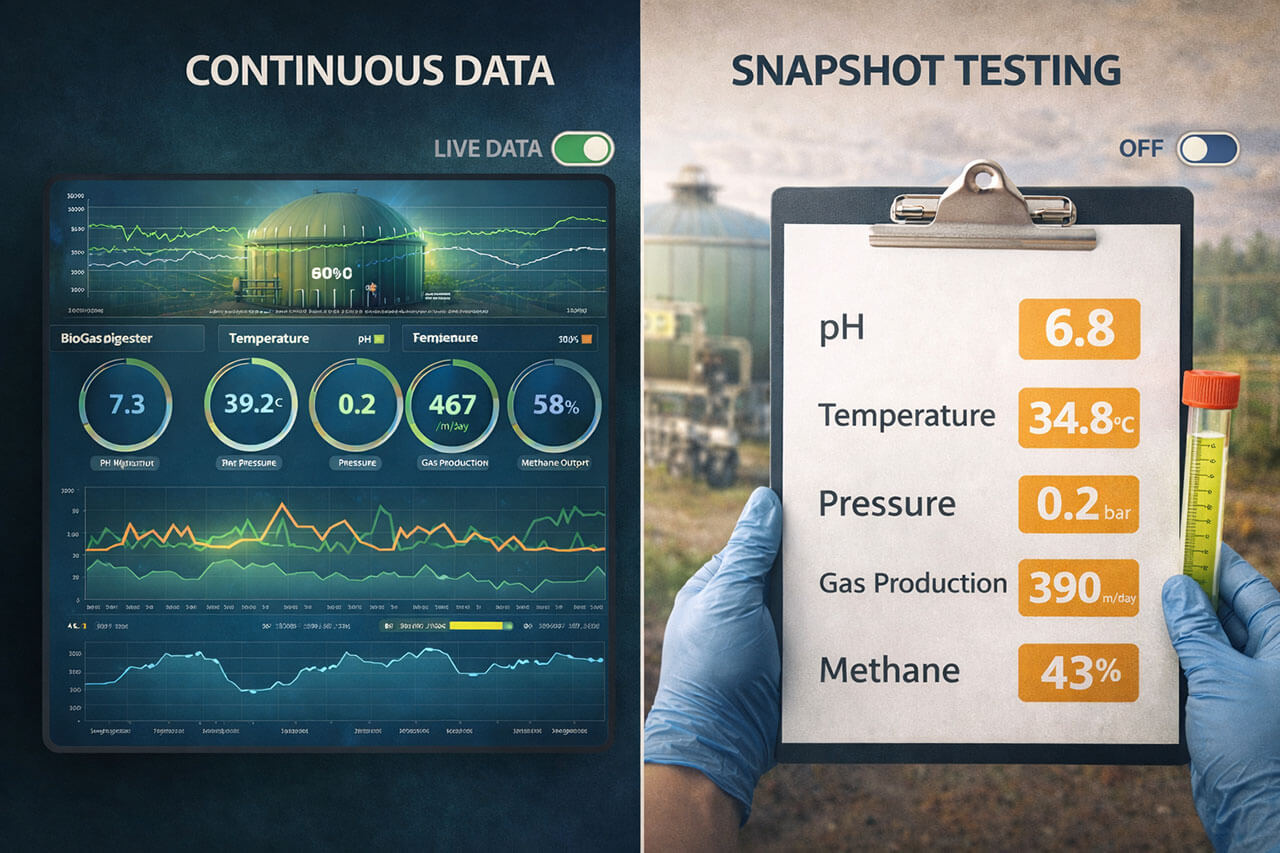
This approach provides valuable data, but only at specific points in time.
Understanding anaerobic digestion helps illustrate why continuous insight is important for maintaining stability.
Limitations of Lab Testing
While widely used, lab testing has several drawbacks:
Delayed Results
There is often a time lag between sampling and receiving results.
During this delay, system conditions may continue to change, potentially worsening issues.
Limited Visibility
Lab tests provide snapshots rather than a continuous view of system performance.
This makes it difficult to detect trends or identify rapid changes.
Reactive Decision-Making
Because data is delayed, operators often respond after problems have already impacted performance.
Learn how instability develops
What Real-Time Monitoring Provides
Real-time monitoring systems continuously track key performance indicators, giving operators immediate insight into system conditions.
This allows for faster and more informed decision-making.
Continuous Data Collection
Operators can monitor performance in real time, rather than relying on periodic snapshots.
Early Detection of Issues
Changes in system behavior can be identified immediately, allowing for proactive intervention.
See how to identify underperformance
Improved Operational Control
With continuous visibility, operators can make adjustments to feedstock, loading rates, and system conditions with greater precision.
Comparing the Two Approaches
Lab Testing
- Periodic data collection
- Delayed insights
- Reactive response
- Limited trend visibility
Real-Time Monitoring
- Continuous data collection
- Immediate insights
- Proactive decision-making
- Full visibility into system trends
Explore Real-Time Monitoring
Why the Industry Is Shifting
As biogas systems scale and performance expectations increase, operators are moving toward more advanced monitoring approaches.
Modern process control systems emphasize continuous feedback and adjustment, which aligns with real-time monitoring capabilities.
This shift enables facilities to operate more efficiently and with greater consistency.
Combining Monitoring with Analytics
Real-time monitoring becomes even more powerful when paired with advanced analytics.
Together, these tools allow operators to:
- Identify patterns and trends
- Predict potential issues
- Optimize system performance
Learn more about Advanced Analytics
Improving Performance Through Better Visibility
Facilities that adopt real-time monitoring gain a significant advantage in managing complex biological systems.
Greater visibility leads to:
- Increased methane production
- Reduced downtime
- Improved system stability
Explore how to increase production
Choosing the Right Approach
Lab testing will continue to play a role in verifying system conditions.
However, relying on it alone is no longer sufficient for modern biogas operations.
Real-time monitoring provides the level of insight needed to maintain performance and scale effectively.