
Maximizing biogas production is a primary objective for operators of anaerobic digestion systems.
Higher methane yield directly impacts energy output, operational efficiency, and overall return on investment. However, increasing production is not simply about adding more feedstock—it requires a balanced, data-driven approach to system management.
Understanding What Drives Biogas Production
Biogas is produced through the breakdown of organic material by microorganisms in an oxygen-free environment, a process known as anaerobic digestion.
The efficiency of this process depends on maintaining optimal biological and operational conditions. Small imbalances can reduce methane output and lead to instability.
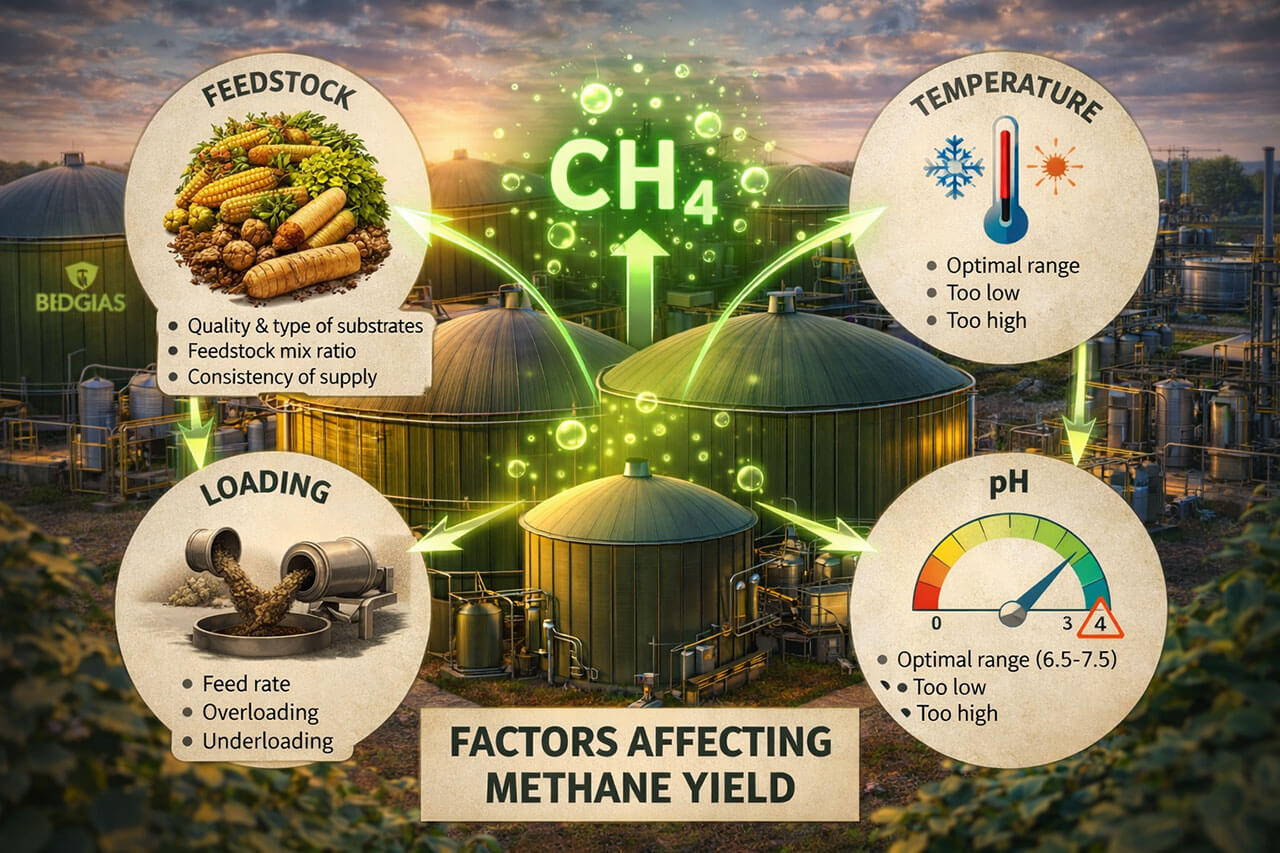
Key Factors That Impact Methane Yield
Several variables influence how effectively a digester produces biogas.
Feedstock Composition
The type and quality of feedstock play a major role in gas production.
Materials rich in easily digestible organic matter tend to produce higher methane yields, while inconsistent or low-quality inputs can reduce efficiency.
Organic Loading Rate
The rate at which material is introduced into the system must be carefully controlled.
Overloading can overwhelm microbial communities, while underloading may limit production potential.
Temperature Control
Consistent temperature is critical for microbial activity.
Most digesters operate within mesophilic or thermophilic ranges, and fluctuations can negatively impact performance.
Learn how system stability impacts performance: Digester Instability
pH and Biological Balance
Maintaining proper pH levels is essential for microbial health.
Imbalances can disrupt digestion and reduce methane output.
The Role of Monitoring and Data
Traditional approaches to monitoring often rely on periodic sampling and lab testing.
While useful, these methods provide delayed insight and limited visibility into real-time conditions.
Modern systems benefit from continuous monitoring and data analysis, which allow operators to detect changes early and make adjustments proactively.
Explore Real-Time Monitoring
Feedstock Optimization Strategies
Improving feedstock management is one of the most effective ways to increase biogas production.
Operators can:
- Standardize input materials where possible
- Blend feedstocks to achieve consistent composition
- Monitor changes in organic content and adjust accordingly
Variability in inputs is a common cause of performance issues. Understanding feedstock variability is key to maintaining stable output.
Leveraging Advanced Analytics
Advanced analytics tools provide deeper insight into system performance.
By analyzing trends and patterns, operators can:
- Identify inefficiencies
- Predict potential issues
- Optimize operating conditions
Learn more about Advanced Analytics
Moving from Reactive to Proactive Operations
Increasing biogas production requires a shift from reactive troubleshooting to proactive system management.
Operators who adopt real-time monitoring and analytics can:
- Improve consistency
- Increase methane yield
- Reduce downtime and risk
Improving Output with Better Visibility
As the demand for renewable natural gas continues to grow, maximizing output becomes increasingly important.
Facilities that invest in better visibility and control are better positioned to scale efficiently and improve long-term performance.
Explore how Nirova helps optimize performance