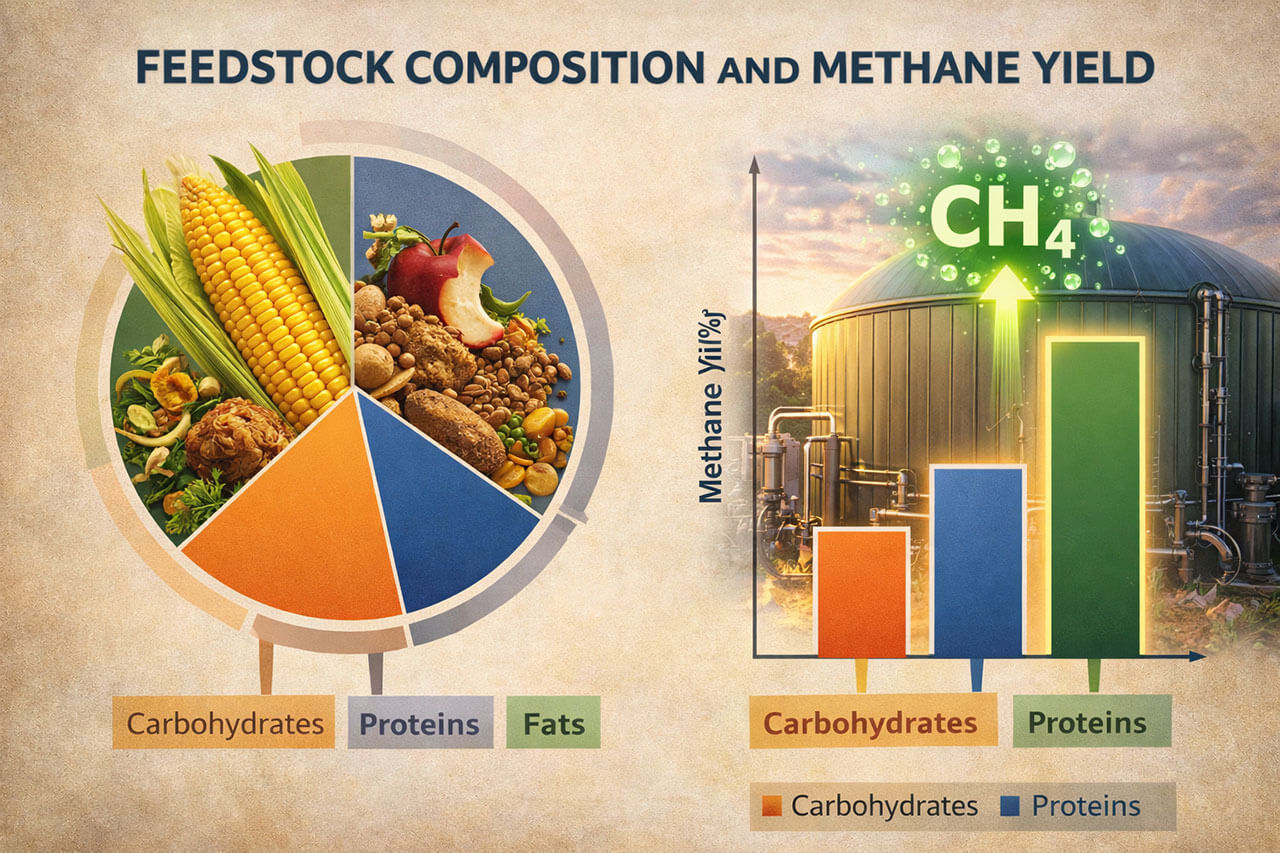


Feedstock is one of the most important—and most overlooked—factors in anaerobic digestion performance.
Even with advanced systems and proper monitoring, inconsistent or poorly managed inputs can significantly reduce methane yield and destabilize operations.
Optimizing feedstock is essential for improving output, maintaining stability, and maximizing return on investment.
Why Feedstock Matters in Anaerobic Digestion
Biogas production depends on the breakdown of organic material by microorganisms.
The type, composition, and consistency of feedstock directly influence how efficiently this process occurs.
Understanding anaerobic digestion helps highlight how sensitive these biological systems are to input conditions.
Key Factors That Impact Feedstock Performance
Several characteristics determine how effectively feedstock contributes to methane production.
Organic Content
Materials with higher biodegradable organic content generally produce more methane.
However, the composition must be balanced to support stable microbial activity.
Consistency and Variability
Frequent changes in feedstock composition can disrupt the biological balance of the system.
Variability is one of the leading causes of instability in anaerobic digesters.
Learn more about instability
Moisture Content
Proper moisture levels are necessary for efficient digestion.
Too much or too little water can affect microbial activity and system performance.
Contaminants and Inhibitors
Certain substances—such as heavy metals, ammonia, or toxic compounds—can inhibit microbial processes and reduce methane production.
The Impact of Feedstock Variability
Feedstock variability can lead to unpredictable system behavior, including:
- Fluctuating gas production
- Increased volatile fatty acids (VFAs)
- pH imbalances
- Reduced system stability
Understanding volatile fatty acids is important, as they are a key indicator of system health and imbalance.
Strategies for Optimizing Feedstock
Improving feedstock management requires a structured approach.
Standardizing Inputs
Where possible, operators should aim to maintain consistent feedstock composition.
This reduces variability and helps stabilize biological processes.
Blending Feedstocks
Combining different materials can help balance organic content and improve overall digestion performance.
Monitoring Feedstock Quality
Regular evaluation of feedstock characteristics allows operators to adjust inputs before issues arise.
Explore Real-Time Monitoring
Adjusting Loading Rates
Feedstock input rates should be aligned with system capacity to avoid overloading or underutilization.
Learn how loading impacts production
The Role of Data in Feedstock Optimization
Feedstock optimization is not a one-time adjustment—it requires continuous monitoring and refinement.
Data-driven insights allow operators to:
- Track changes in feedstock composition
- Identify trends affecting performance
- Make informed operational adjustments
Learn more about Advanced Analytics
Connecting Feedstock to System Performance
Feedstock decisions directly impact system stability, methane yield, and overall efficiency.
Operators who actively manage feedstock inputs can:
- Increase biogas production
- Reduce variability
- Improve long-term system performance
Optimizing Inputs for Better Output
As biogas operations scale, feedstock optimization becomes increasingly important.
Facilities that prioritize input quality and consistency are better positioned to maximize output and minimize risk.
Explore how Nirova supports optimization