

As biogas and renewable natural gas (RNG) systems become more complex, operators are moving beyond basic monitoring toward more advanced, data-driven approaches.
Predictive analytics is at the forefront of this shift—helping facilities anticipate issues, optimize performance, and make more informed decisions.
Rather than reacting to problems after they occur, predictive analytics enables operators to act before performance is impacted.
What Is Predictive Analytics?
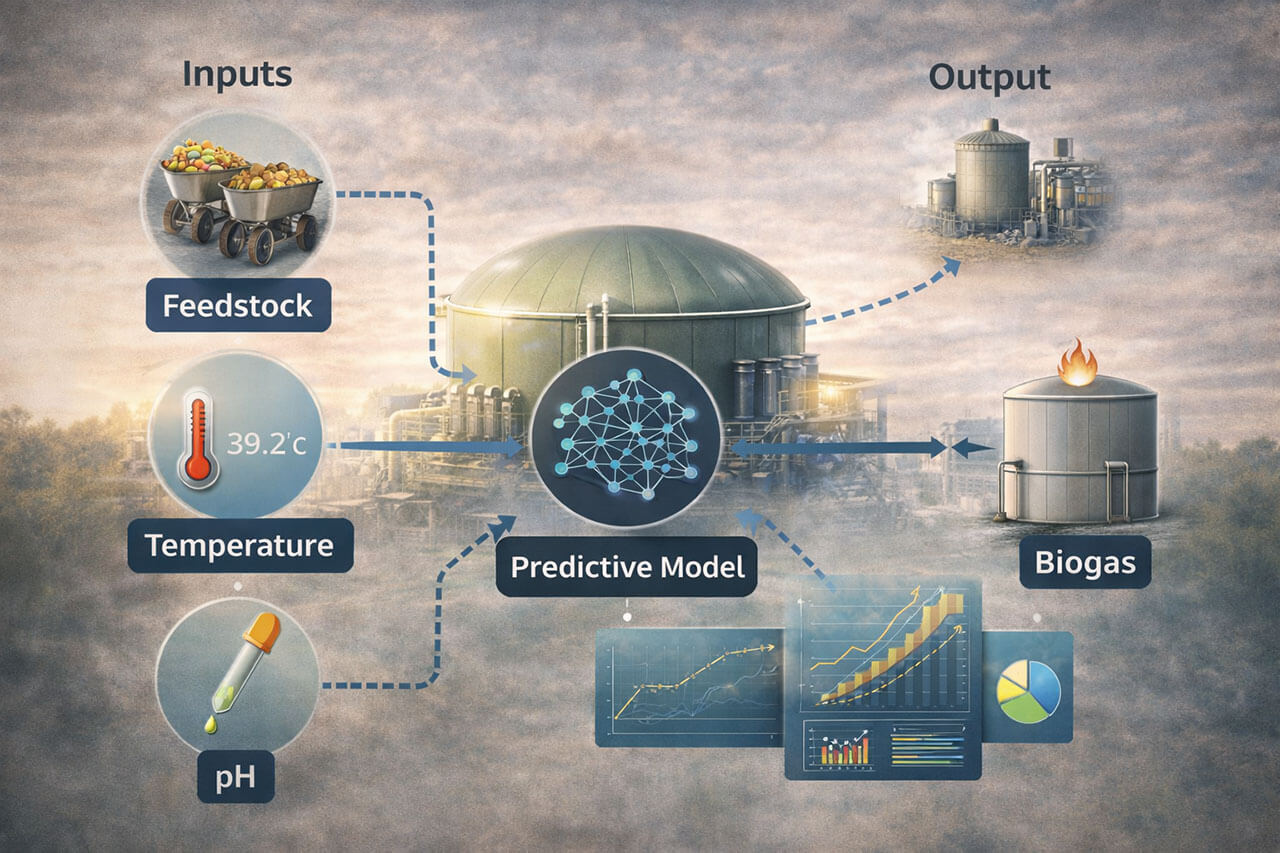
Predictive analytics uses historical data, real-time inputs, and advanced algorithms to forecast future system behavior.
In the context of biogas operations, this means identifying patterns that indicate potential instability, inefficiency, or performance decline.
Understanding predictive analytics provides a foundation for how these models work across industries.
Why Predictive Analytics Matters in Biogas Systems
Anaerobic digestion is a complex biological process influenced by many variables, including feedstock composition, temperature, and microbial activity.
Small changes can have significant downstream effects.
Predictive analytics helps operators:
- Identify trends before they become problems
- Anticipate system instability
- Optimize operating conditions
- Improve consistency and output
Learn more about instability
From Monitoring to Prediction
Traditional monitoring tells operators what is happening now.
Predictive analytics goes a step further by indicating what is likely to happen next.
This transition represents a major shift in how biogas facilities are managed.
Explore Real-Time Monitoring
Key Applications of Predictive Analytics
Early Detection of Instability
Predictive models can identify subtle changes in system behavior that signal potential instability.
This allows operators to take action before performance declines.
Feedstock Optimization
By analyzing how different inputs impact performance, predictive analytics can guide feedstock decisions and improve methane yield.
Performance Forecasting
Operators can project future methane production and system efficiency based on current conditions and historical trends.
Maintenance Planning
Predictive insights can help identify when equipment or processes may require attention, reducing unplanned downtime.
The Role of Data Quality
Predictive analytics is only as effective as the data it relies on.
Accurate, continuous data collection is essential for building reliable models.
This is why real-time monitoring plays a critical role in enabling predictive capabilities.
Combining Analytics with Operational Expertise
While predictive models provide valuable insights, they are most effective when combined with operator knowledge and experience.
Understanding machine learning can help illustrate how systems improve over time, but human oversight remains essential.
Moving Toward Smarter Biogas Operations
Facilities that adopt predictive analytics gain a significant advantage in managing complex systems.
These operators can:
- Reduce variability
- Improve methane production
- Increase operational efficiency
- Minimize risk
Unlocking the Full Value of Data
Data alone is not enough—operators need actionable insights that can be applied in real time.
Predictive analytics transforms raw data into meaningful guidance for improving performance.
Learn more about Advanced Analytics
The Future of Biogas Optimization
As the industry evolves, predictive analytics will play an increasingly important role in improving system performance and scalability.
Operators who adopt these tools early will be better positioned to meet growing demand for renewable energy.
Explore how Nirova enables smarter operations