
Anaerobic digesters rarely fail all at once.
In most cases, performance declines gradually—often going unnoticed until methane production drops or system instability becomes severe.
Recognizing early warning signs is critical to maintaining efficiency, preventing downtime, and maximizing return on investment.
Why Early Detection Matters
Underperformance in a digester system can lead to:
- Reduced methane production
- Increased operating costs
- Greater risk of system instability
- Long-term damage to biological processes
Identifying issues early allows operators to take corrective action before problems escalate.
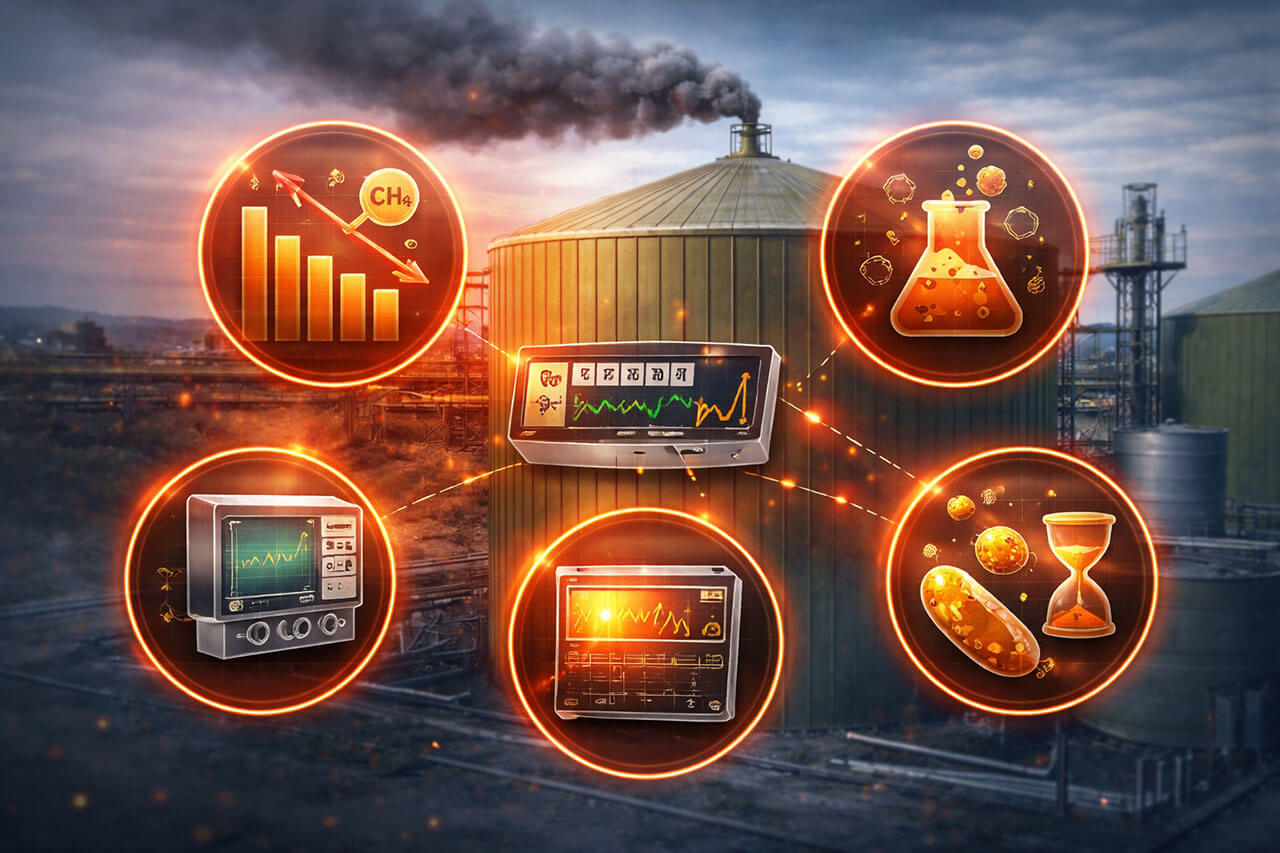
1. Declining Methane Production
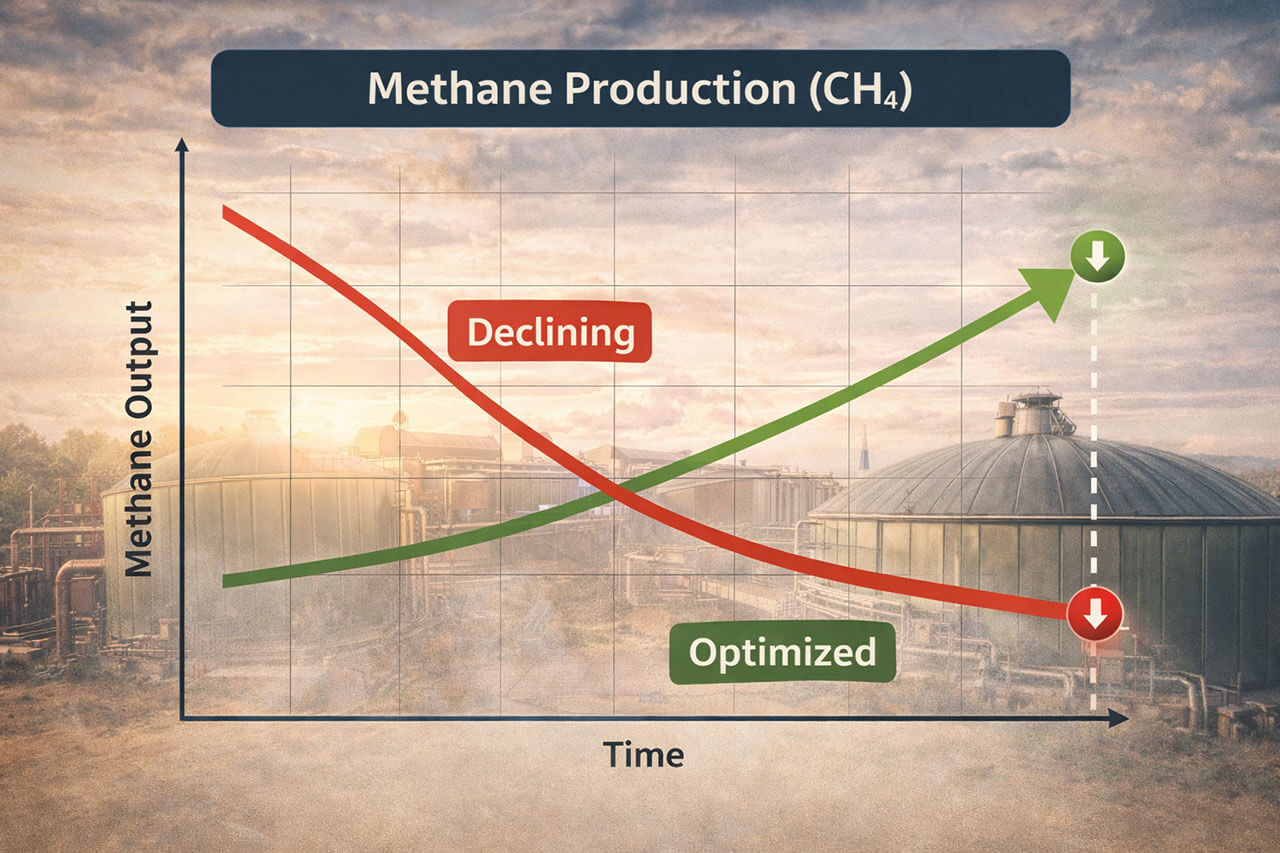
One of the most obvious indicators of underperformance is a drop in methane output.
This can result from:
- Poor feedstock quality
- Imbalanced biological conditions
- Inefficient system operation
Learn how to improve production
2. Increased Volatile Fatty Acids (VFAs)
A buildup of volatile fatty acids is a key sign of imbalance within the digester.
High VFA levels often indicate that the microbial community is struggling to process incoming material effectively.
This can lead to reduced methane production and system instability.
3. Fluctuating pH Levels
Stable pH levels are essential for microbial health.
Frequent fluctuations can disrupt digestion and reduce system efficiency.
pH instability is often linked to:
- Feedstock variability
- Overloading
- Accumulation of acids
Understand the causes of instability
4. Inconsistent Gas Composition
Changes in gas composition—such as reduced methane concentration or increased carbon dioxide—can signal underlying issues.
Understanding biogas composition helps operators identify when performance is deviating from optimal conditions.
5. Slower Digestion Rates
When digestion slows, material remains in the system longer than expected.
This can reduce throughput and limit overall production capacity.
Slower digestion is often a symptom of:
- Suboptimal operating conditions
- Microbial stress
- Inefficient feedstock utilization
What Causes Underperformance?
Underperformance is typically not caused by a single issue, but rather a combination of factors, including:
- Feedstock variability
- Improper loading rates
- Lack of real-time visibility
- Delayed response to system changes
Explore feedstock optimization strategies
Why Traditional Monitoring Misses These Signals
Many facilities rely on periodic testing to evaluate performance.
While useful, this approach often fails to detect issues early enough to prevent impact.
Operators need continuous visibility into system conditions to identify trends and respond quickly.
Learn more about Real-Time Monitoring
Turning Insight into Action
Identifying underperformance is only the first step.
Improving results requires:
- Better data
- Faster decision-making
- More precise operational control
Advanced analytics tools can help operators understand what is happening inside the system and take targeted action.
Improving Performance with Better Visibility
Facilities that adopt real-time monitoring and data-driven strategies are better equipped to:
- Maintain stable operations
- Increase methane production
- Reduce downtime and risk
Explore how Nirova helps improve performance