
Biogas and renewable natural gas (RNG) facilities operate in dynamic biological environments where conditions can change rapidly.
Without continuous visibility into system performance, small issues can escalate into significant operational problems.
Real-time monitoring provides operators with the insight needed to maintain stability, improve efficiency, and maximize methane production.
The Limitations of Traditional Monitoring Methods
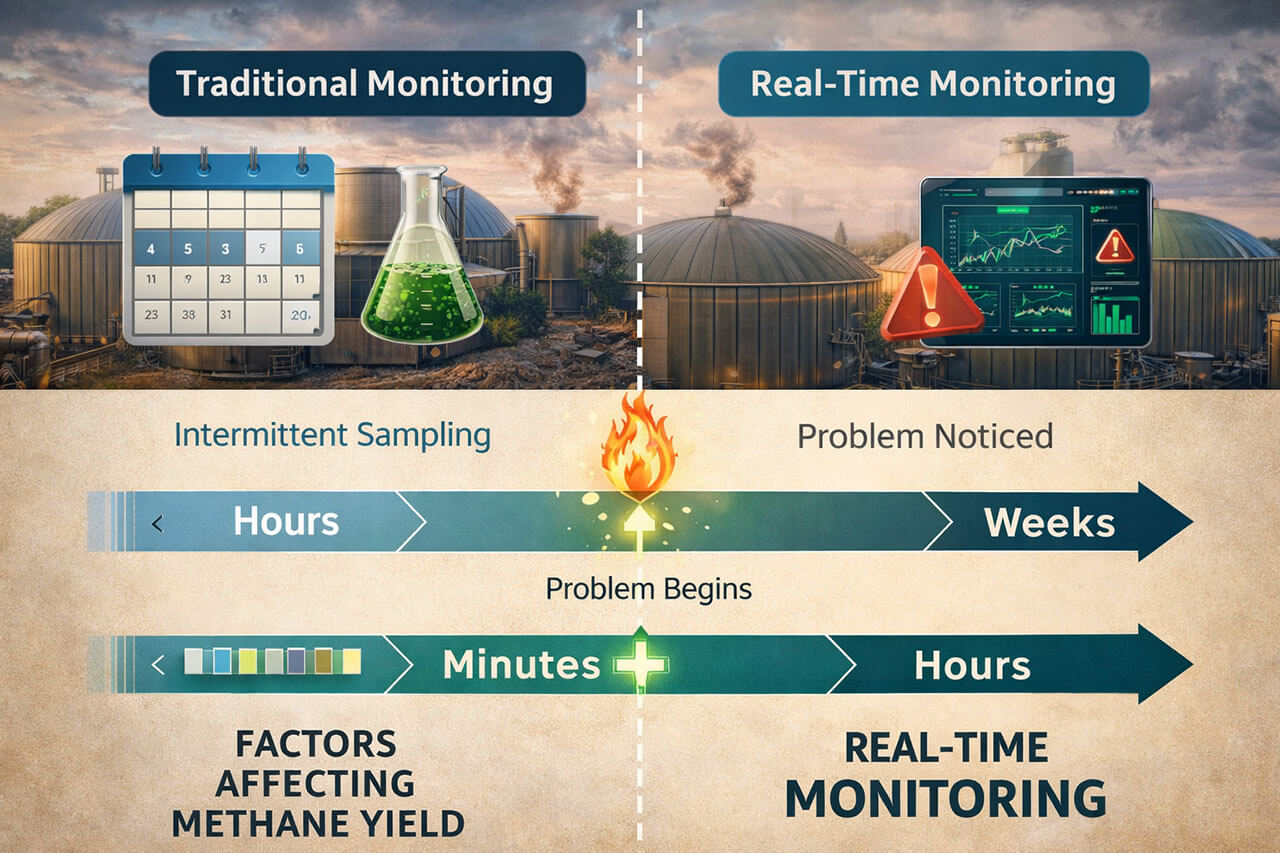
Many facilities rely on periodic sampling and lab testing to assess system performance.
While these methods provide useful data, they have significant limitations:
- Delayed feedback on system conditions
- Limited visibility between testing intervals
- Inability to detect rapid changes
By the time issues are identified, performance may already be impacted.
How Anaerobic Digestion Systems Evolve in Real Time
Anaerobic digestion is a continuous biological process where microbial activity responds to changes in feedstock, temperature, and system conditions.
This process is highly sensitive, and fluctuations can occur quickly.
Understanding how anaerobic digestion behaves in real time is essential for maintaining system performance.
The Benefits of Real-Time Monitoring
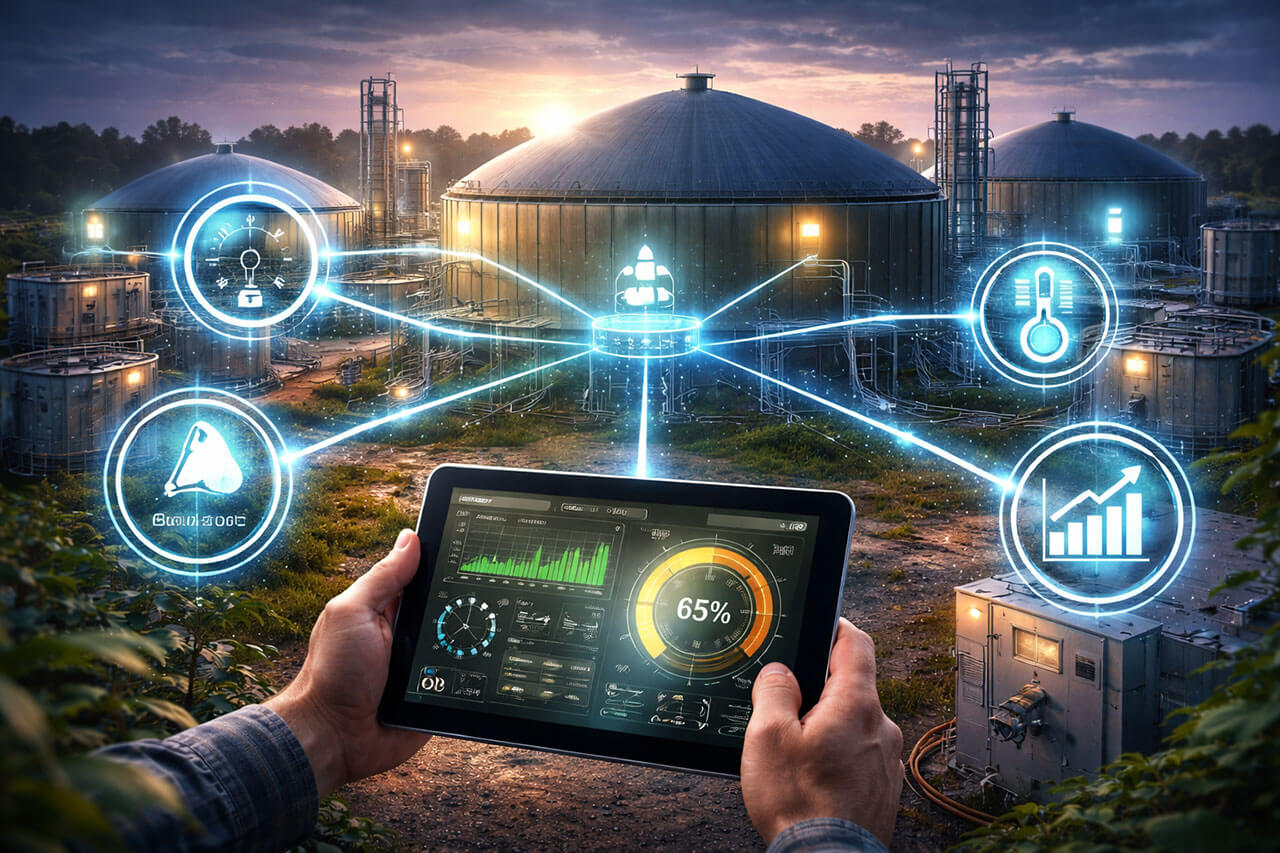
Real-time monitoring systems provide continuous data on key performance indicators, allowing operators to make informed decisions as conditions change.
Early Detection of Instability
Real-time data allows operators to identify warning signs before they escalate into major issues.
This includes changes in gas production, pH levels, and biological activity.
Learn more about instability in digesters
Improved Operational Control
Continuous visibility enables operators to make precise adjustments to feedstock inputs, loading rates, and system conditions.
This leads to more consistent performance and reduced variability.
Increased Methane Production
When systems are monitored and optimized continuously, methane yield can be improved by maintaining optimal biological conditions.
Explore how to increase production
Reduced Downtime and Risk
By identifying issues early, operators can prevent costly system disruptions and maintain steady operations.
From Reactive to Proactive Operations
Traditional monitoring approaches are reactive—operators respond after problems occur.
Real-time monitoring shifts operations to a proactive model, where decisions are based on current system conditions rather than delayed data.
This shift is essential for scaling biogas operations efficiently.
The Role of Data and Analytics
Real-time monitoring is most effective when combined with advanced analytics.
Data alone is not enough—operators need actionable insights that help interpret system behavior and guide decision-making.
Learn more about Advanced Analytics
Building More Resilient Biogas Systems
As the demand for renewable energy increases, biogas facilities must operate with greater consistency and reliability.
Real-time monitoring provides the foundation for:
- Stable system performance
- Optimized resource utilization
- Scalable operations
Understanding modern process control approaches can further enhance system reliability and efficiency.
Unlocking Better Performance Through Visibility
Operators who invest in real-time monitoring gain a significant advantage in managing complex biological systems.
Greater visibility leads to better decisions, improved outcomes, and higher returns.
Explore Nirova’s platform