
Anaerobic digestion has traditionally been managed through experience, periodic testing, and manual adjustments.
While these methods have supported the growth of the biogas industry, they often lack the precision and responsiveness needed to maximize performance in modern systems.
Data analytics is changing this—providing operators with deeper insight, better control, and new opportunities to improve efficiency and output.
The Evolution of Biogas Operations
Biogas systems are becoming more complex as facilities scale and performance expectations increase.
Operators are managing:
- More diverse feedstocks
- Higher throughput requirements
- Greater pressure to optimize output
Understanding anaerobic digestion highlights how sensitive these systems are to changes in operating conditions.
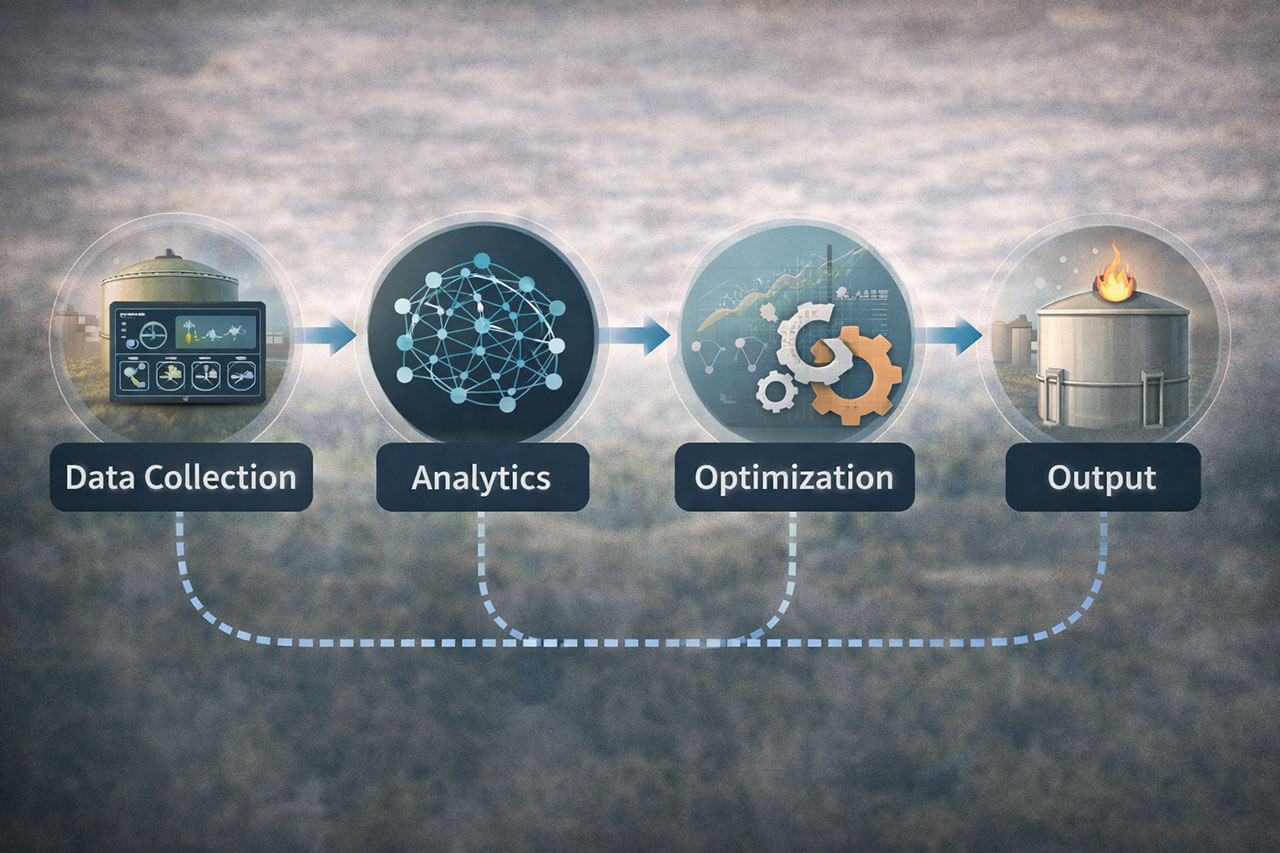
From Data Collection to Data Utilization
Historically, data in biogas systems was limited and underutilized.
Operators collected information, but often lacked the tools to interpret it effectively.
Modern analytics transforms this approach by:
- Aggregating data from multiple sources
- Identifying patterns and trends
- Providing actionable insights
This shift enables operators to move beyond observation and toward optimization.
Key Ways Analytics Improves Performance
Increased Visibility
Analytics provides a clearer understanding of system behavior, allowing operators to see how different variables interact.
This visibility is essential for maintaining stability and improving output.
Explore Real-Time Monitoring
Better Decision-Making
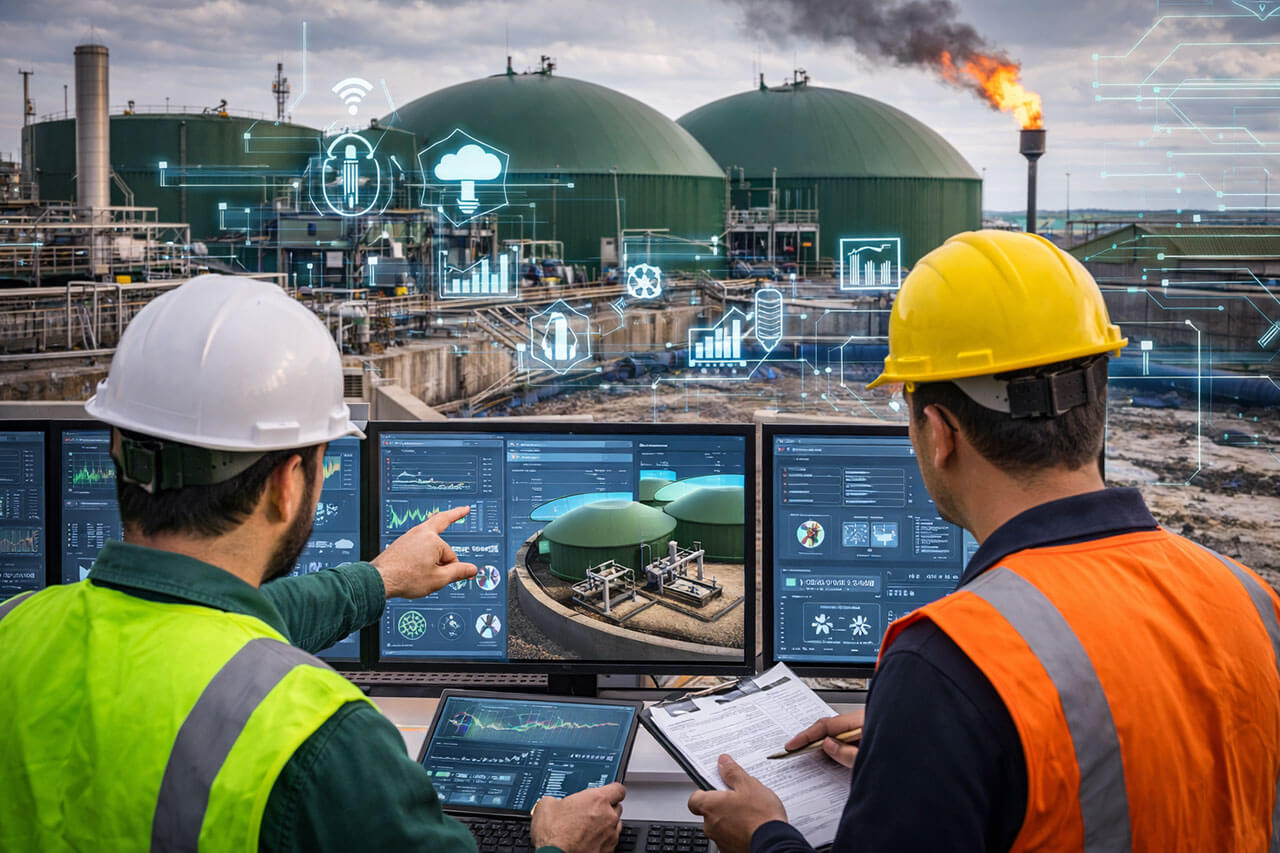
With access to real-time and historical data, operators can make more informed decisions about feedstock management, loading rates, and system adjustments.
Early Problem Detection
Analytics can identify trends that indicate potential issues before they impact performance.
Learn how instability develops
Continuous Optimization
Rather than making occasional adjustments, operators can continuously refine system performance based on data insights.
The Role of Advanced Analytics
Advanced analytics goes beyond basic reporting by applying algorithms and models to interpret complex data sets.
This includes techniques such as data analysis, which help uncover relationships and optimize outcomes.
These tools enable operators to:
- Predict system behavior
- Optimize feedstock inputs
- Improve methane yield
Learn more about Advanced Analytics
Connecting Data to Operational Outcomes
Data analytics is most valuable when it leads to measurable improvements.
Facilities that adopt analytics-driven approaches can:
- Increase methane production
- Reduce variability
- Improve system stability
- Lower operating costs
See how to increase production
Breaking Down Data Silos
In many facilities, data is fragmented across different systems and processes.
Analytics platforms bring this information together, creating a unified view of system performance.
This integration is essential for understanding how different variables impact outcomes.
Enabling Smarter Biogas Operations
As the industry evolves, data analytics is becoming a core component of modern biogas operations.
Facilities that embrace data-driven strategies gain a competitive advantage in efficiency, reliability, and scalability.
Explore how Nirova supports smarter operations
From Insight to Action
Analytics is not just about understanding data—it is about applying insights to improve performance.
Operators who use analytics effectively can make faster, more precise adjustments that drive better results.
The Future of Anaerobic Digestion
The future of biogas optimization will be driven by data.
As technologies continue to evolve, analytics will play an increasingly important role in helping operators maximize performance and meet growing demand for renewable energy.