
Anaerobic digester instability is one of the most common and costly challenges facing biogas and renewable natural gas (RNG) operators.
Even small disruptions in system balance can lead to reduced methane production, process inefficiencies, or full system failure if not addressed quickly.
Understanding the root causes of instability—and how to identify them early—is critical to maintaining consistent performance.
Why Stability Matters in Anaerobic Digestion
Anaerobic digestion relies on a delicate biological balance between microorganisms that break down organic material and produce methane.
When that balance is disrupted, system performance declines.
Instability can result in:
- Lower methane yield
- Increased downtime
- Higher operating costs
- Greater risk of system upset or failure
Maintaining stability is essential for both operational efficiency and long-term return on investment.
Common Causes of Digester Instability
Several factors can disrupt the biological balance within a digester system.
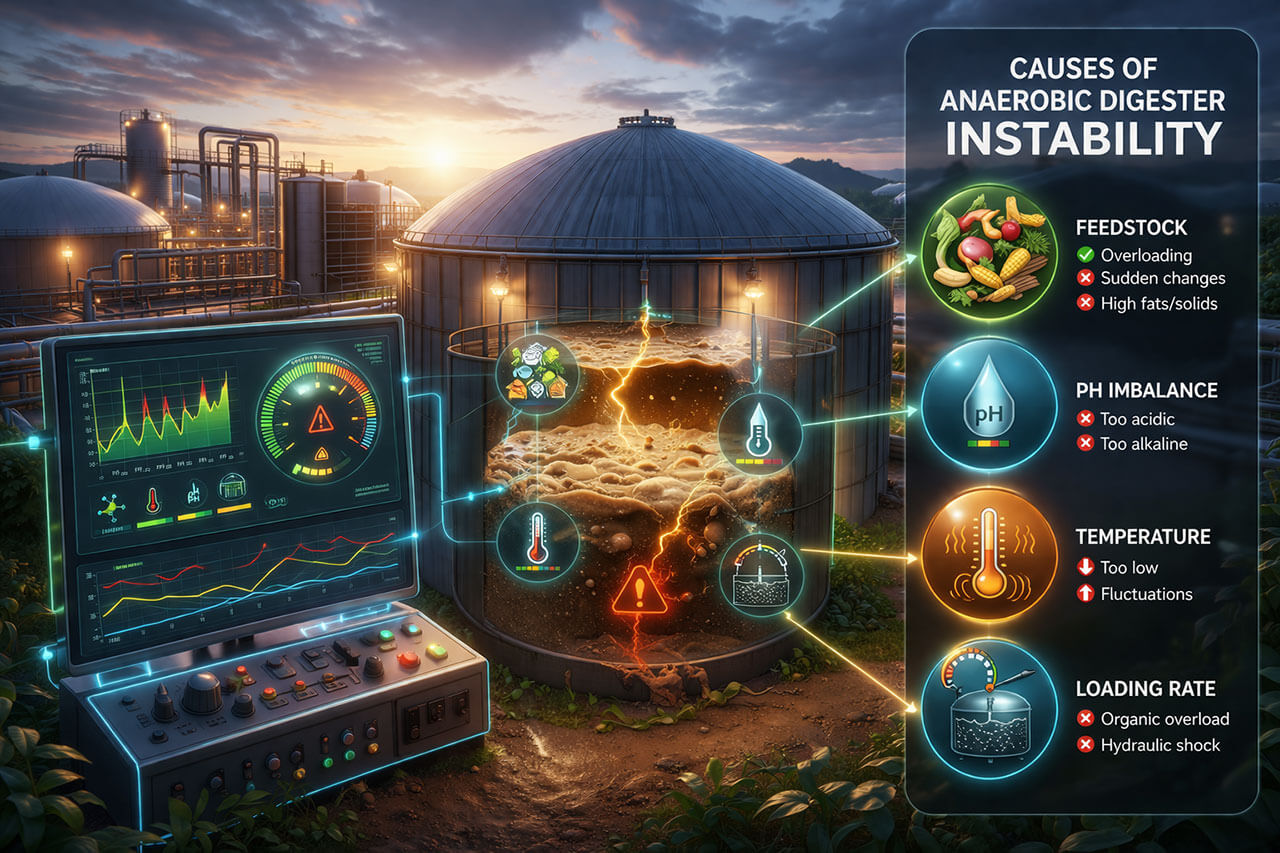
Feedstock Variability
Changes in feedstock composition are one of the leading causes of instability.
Variations in organic content, moisture levels, or contaminants can impact how microorganisms respond, leading to inconsistent performance.
Organic Overloading
Introducing too much organic material too quickly can overwhelm the microbial community.
This can lead to acid accumulation and reduced methane production.
pH Imbalance
Microbial activity is highly sensitive to pH levels.
Even small deviations outside the optimal range can disrupt biological processes and reduce system efficiency.
Temperature Fluctuations
Anaerobic digestion requires consistent temperature conditions.
Sudden changes can stress microbial populations and reduce their effectiveness.
Toxic Compounds
The presence of inhibitory substances—such as ammonia, sulfides, or heavy metals—can negatively impact microbial health and system performance.
Warning Signs of an Unstable Digester
Operators can often detect instability early by monitoring key performance indicators.
Common warning signs include:
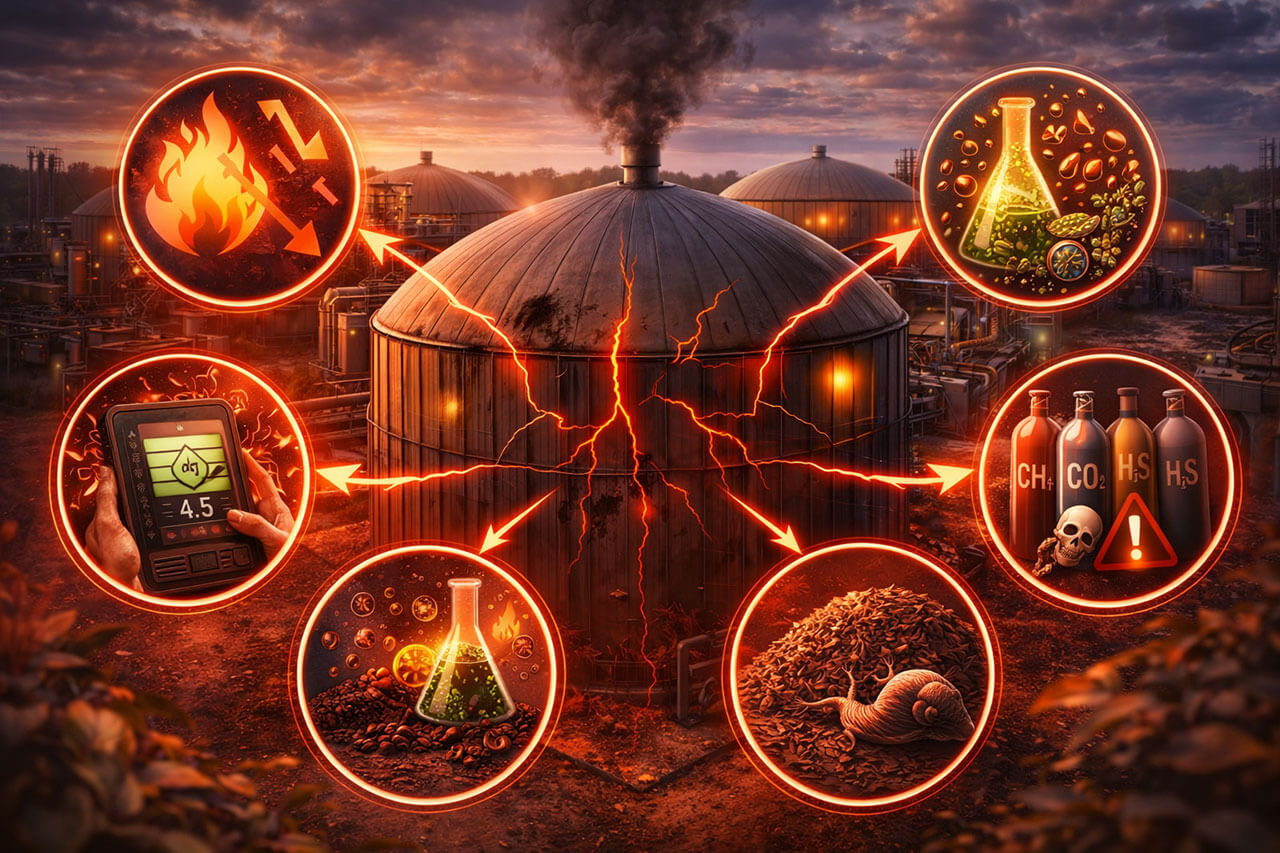
- Declining methane production
- Increased volatile fatty acids (VFAs)
- Fluctuating pH levels
- Irregular gas composition
- Slower digestion rates
Identifying these signals early allows operators to take corrective action before issues escalate.
Why Traditional Monitoring Falls Short
Many facilities rely on periodic lab testing to assess system performance.
While useful, this approach has limitations:
- Delayed feedback
- Limited visibility into real-time conditions
- Inability to detect rapid changes
By the time issues are identified, performance may already be impacted.
How Real-Time Monitoring Improves Stability
Real-time monitoring provides continuous visibility into system conditions, allowing operators to respond quickly to changes.
With the right data, facilities can:
- Detect instability earlier
- Adjust feedstock inputs more effectively
- Maintain optimal operating conditions
- Reduce risk and variability
Learn more about Real-Time Monitoring
Moving Toward More Stable, Predictable Systems
As biogas and RNG operations scale, maintaining stability becomes increasingly important.
Operators who adopt more advanced monitoring and analytics approaches are better positioned to:
- Improve consistency
- Increase methane production
- Maximize system performance
Explore how Nirova helps optimize performance