
The biogas and renewable natural gas (RNG) industry is entering a new phase.
After years of growth driven by policy, sustainability goals, and infrastructure investment, the next wave of progress will be defined by performance, efficiency, and operational intelligence.
At the center of this shift is data.
From Growth to Optimization
The early expansion of biogas systems focused on building capacity—developing facilities, securing feedstock, and scaling production.
Today, the challenge has changed.
Operators and investors are no longer asking:
“How do we build more?”
They are asking:
“How do we get more from what we already have?”
This shift toward optimization is reshaping how facilities are evaluated and managed.
The Limits of Traditional Operations
Many biogas systems were designed to operate under relatively static assumptions.
In practice, however, these systems are highly dynamic.
Feedstock variability, biological sensitivity, and changing operating conditions create constant fluctuations in performance.
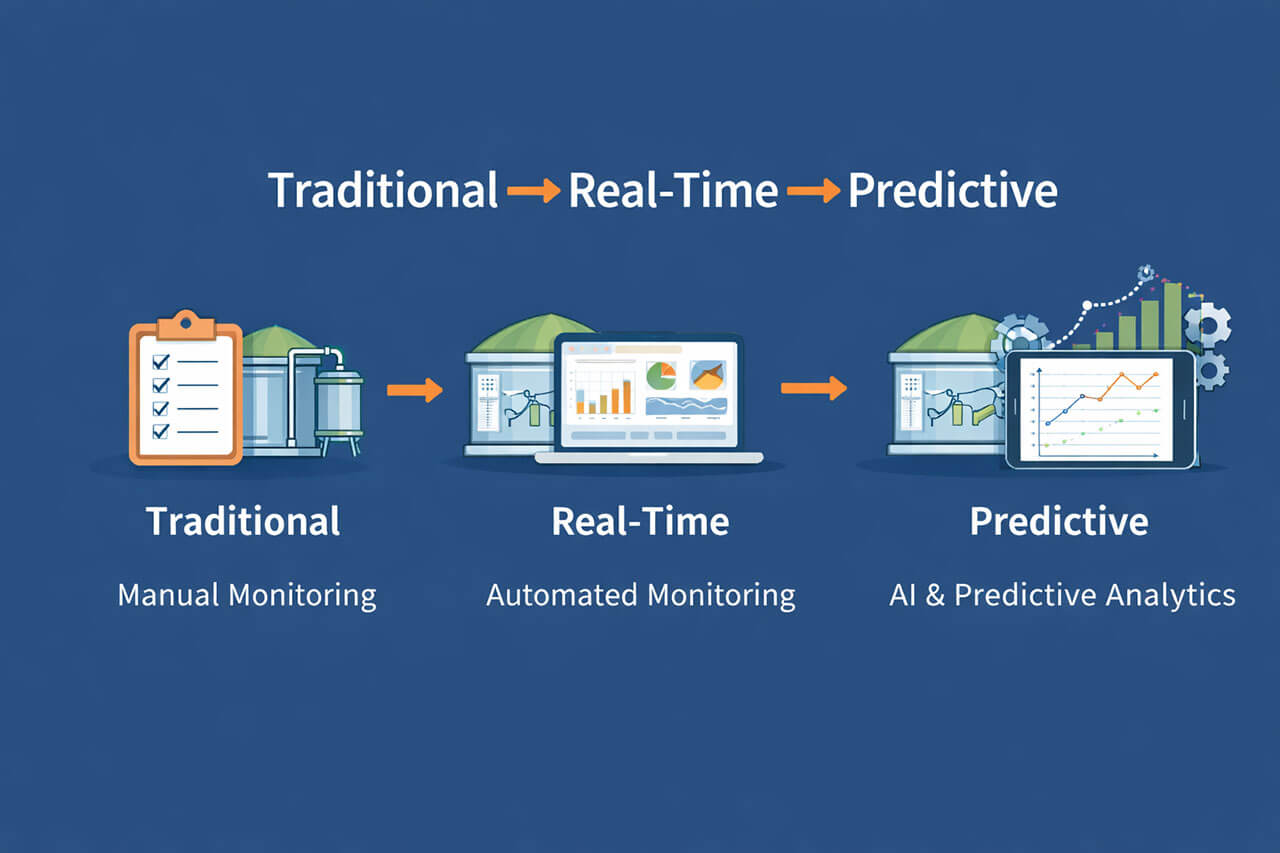
Without continuous visibility, operators are often forced into reactive decision-making—responding after performance has already declined.
Data as the Foundation for Modern Biogas Systems
The ability to collect, analyze, and act on data is becoming a defining factor in system performance.
Understanding anaerobic digestion highlights how complex and sensitive these biological processes are.
Modern facilities are increasingly adopting systems that provide:
- Real-time monitoring of key performance indicators
- Continuous visibility into system conditions
- Data-driven decision support
This shift enables operators to move from reactive management to proactive optimization.
The Rise of Intelligent Operations
Data alone is not enough.
The real transformation comes from turning data into insight—and insight into action.
This is where analytics and predictive systems play a critical role.
Understanding predictive analytics helps frame how systems can anticipate changes rather than simply report them.
Intelligent operations allow facilities to:
- Identify early signs of instability
- Optimize feedstock strategies
- Improve methane yield
- Reduce variability and risk
Performance as a Competitive Advantage
As the biogas industry matures, performance is becoming a key differentiator.
Facilities that operate more efficiently and consistently will:
- Generate higher returns
- Reduce operational risk
- Scale more effectively
This has implications not only for operators, but also for investors and stakeholders evaluating long-term viability.
The Convergence of Energy and Data
Biogas is no longer just an energy infrastructure play.
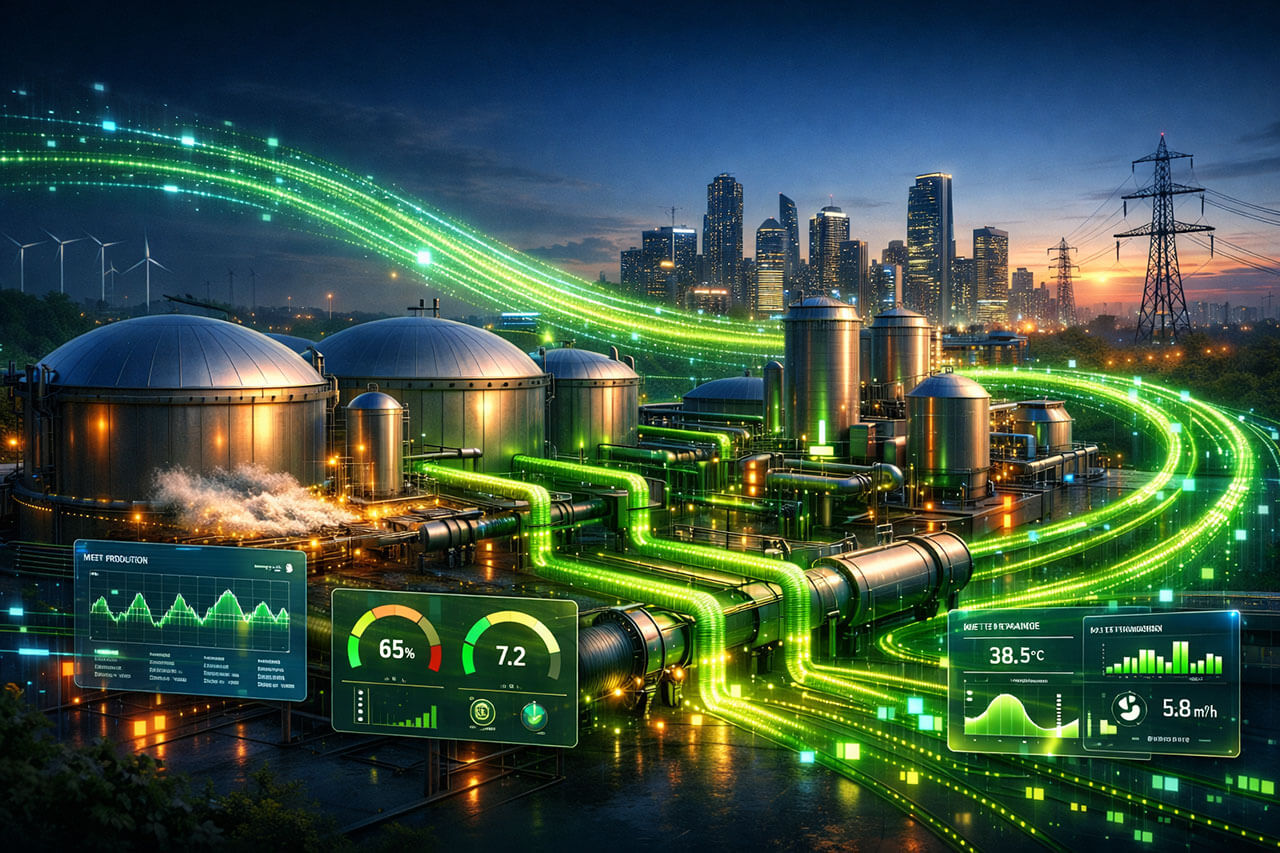
It is increasingly a data-driven system where performance depends on visibility, control, and continuous optimization.
This convergence is reshaping expectations across the industry.
Operators are no longer measured solely by output—but by how efficiently and predictably they can produce it.
What This Means for the Future
The next generation of biogas systems will be defined by:
- Greater reliance on real-time data
- Increased use of analytics and predictive modeling
- More automated and intelligent decision-making
Facilities that adopt these approaches early will be better positioned to compete in an increasingly performance-driven market.
From Insight to Impact
Understanding where the industry is heading is only the first step.
The real opportunity lies in applying these insights to improve how systems are designed, operated, and optimized.
Explore how Nirova enables data-driven optimization
Looking Ahead
The future of biogas and RNG will not be defined by scale alone.
It will be defined by how effectively systems are managed, optimized, and improved over time.
Data is not just an enhancement—it is becoming the foundation of modern biogas operations